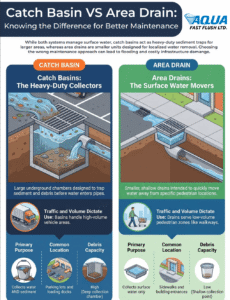
When it comes to commercial drainage systems, catch basins and area drains are often mistaken for one another. While both are designed to collect and direct stormwater or surface water away from a property, they serve different purposes and are built to handle different drainage conditions.
Understanding the difference between a commercial catch basin and an area drain can help property managers, facility managers, and maintenance teams develop the right drain cleaning and preventative maintenance plan.
What Is a Commercial Catch Basin?
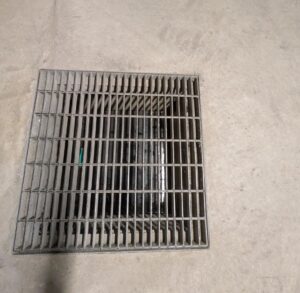
A commercial catch basin is a larger drainage structure designed to collect significant amounts of surface water, sediment, debris, and other material before water enters the underground drainage system.
Catch basins are commonly found in:
- Commercial parking lots
- Industrial facilities
- Loading docks
- Truck yards
- Warehouses
- Manufacturing facilities
- Food processing facilities
- Municipal and institutional properties
- Large paved areas
A typical catch basin includes a grate at ground level and a larger underground chamber below. The chamber provides space for sediment, dirt, leaves, gravel, and other debris to settle before water continues into the connected drainage piping.
Why Catch Basin Maintenance Matters
Because catch basins collect debris, they require regular inspection and cleaning. Over time, accumulated sediment can reduce the basin’s capacity and restrict water flow.
A neglected catch basin can contribute to:
- Standing water
- Flooding
- Blocked drainage lines
- Parking lot drainage problems
- Basement or building water intrusion
- Unpleasant odours
- Increased strain on underground drainage infrastructure
For commercial properties, routine catch basin cleaning is an important part of preventative drainage maintenance.
What Is an Area Drain?
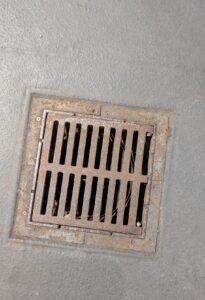
An area drain is generally a smaller drain designed to collect surface water from a specific area and direct it into an underground drainage system.
Area drains are commonly found around:
- Building entrances
- Sidewalks
- Courtyards
- Patios
- Mechanical areas
- Smaller paved surfaces
- Landscaped areas
- Exterior building areas
Unlike a catch basin, an area drain typically has a relatively shallow collection point and does not provide the same amount of space for sediment and debris to settle.
Area drains are primarily designed to move water away from a specific location rather than act as a large sediment collection point.
Commercial Catch Basin vs. Area Drain: Key Differences
| Feature | Commercial Catch Basin | Area Drain |
|---|---|---|
| Primary purpose | Collect surface water and sediment | Collect surface water |
| Size | Generally larger | Generally smaller |
| Collection chamber | Deeper/larger chamber | Typically shallow |
| Sediment capacity | Higher | Lower |
| Typical location | Parking lots, yards, loading areas | Walkways, entrances, smaller areas |
| Maintenance needs | Regular debris and sediment removal | Regular inspection and cleaning |
| Traffic exposure | Often designed for vehicle areas | Usually pedestrian/light-duty areas |
| Drainage volume | Typically handles higher volumes | Typically handles lower volumes |
Why the Difference Matters for Commercial Properties
For a commercial or industrial property, identifying the type of drainage infrastructure you have is important when developing a maintenance program.
A catch basin in a busy commercial parking lot may collect substantial amounts of:
- Dirt and sediment
- Gravel
- Leaves
- Organic debris
- Road salt
- Oil and other contaminants
- General surface debris
An area drain may collect less material, but it can still become blocked by leaves, dirt, garbage, landscaping debris, and other contaminants.
In either case, a blockage can prevent water from reaching the underground drainage system efficiently.
Catch Basin Maintenance vs. Area Drain Maintenance
The maintenance approach can also differ depending on the type of drain.
Catch Basin Cleaning
Commercial catch basins often require vacuum cleaning to remove accumulated sediment and debris from the collection chamber.
Depending on the property and level of contamination, maintenance may include:
- Opening and inspecting the basin
- Removing accumulated sediment and debris
- Vacuuming the collection chamber
- Inspecting the grate and surrounding area
- Checking the connected drainage system
- Flushing or cleaning connected lines when required
For properties with heavy vehicle traffic or high levels of sediment, catch basin cleaning may need to be scheduled more frequently.
Area Drain Cleaning
Area drains typically require inspection to identify debris or restrictions at the drain opening and within the connected piping.
Maintenance may include:
- Removing surface debris
- Clearing blockages
- High-pressure drain flushing
- Video inspection
- Cleaning connected drainage lines
- Checking for damaged or deteriorated piping
The appropriate maintenance method depends on the size of the drain, the condition of the system, and the type of material entering the drainage network.
How Often Should Commercial Drains Be Cleaned?
There is no single maintenance schedule that works for every commercial property.
Cleaning frequency should be based on factors such as:
- Drain size
- Property size
- Traffic volume
- Amount of surrounding vegetation
- Amount of sediment entering the system
- Seasonal conditions
- Previous drainage issues
- Type of business or facility
- History of flooding or blockages
Properties with large parking lots, loading docks, industrial yards, or significant vehicle traffic may require more frequent catch basin maintenance than smaller commercial properties.
A preventative inspection can help determine how quickly sediment and debris are accumulating and establish a practical cleaning schedule.
Don’t Wait Until a Drain Overflows
One of the biggest mistakes commercial property owners and facility managers can make is treating drainage maintenance as an emergency-only service.
A drain may continue accepting water even while sediment and debris are gradually accumulating. By the time water begins pooling around a catch basin or area drain, the underlying drainage system may already be restricted.
Preventative maintenance helps identify these issues before they become costly disruptions.
For commercial facilities, scheduled drain and catch basin maintenance can help:
- Reduce the risk of flooding
- Maintain proper drainage
- Protect surrounding infrastructure
- Extend the useful life of drainage systems
- Reduce emergency service calls
- Improve overall site safety
- Keep drainage systems operating reliably
Which One Does Your Property Have?
If you’re unsure whether your property has catch basins, area drains, or a combination of both, a professional drainage inspection can help identify the system and its maintenance requirements.
Aqua Fast Flush provides commercial drain maintenance and catch basin cleaning services for businesses and facilities across Ontario. Our preventative approach is designed to identify drainage problems before they lead to costly interruptions.
Whether you’re managing a commercial property, industrial facility, food processing plant, warehouse, parking lot, or institutional facility, understanding your drainage infrastructure is the first step toward keeping it flowing.
Keep Your Commercial Drainage System Flowing
Don’t wait for standing water or flooding to reveal a drainage problem. A proactive maintenance program can help keep catch basins, area drains, and connected drainage infrastructure operating effectively throughout the year.
Aqua Fast Flush provides commercial catch basin cleaning, drain cleaning, high-pressure flushing, vacuum services, and preventative drain maintenance across Ontario.
Need help maintaining your commercial drainage system? Contact Aqua Fast Flush to discuss a preventative drain maintenance program for your facility.
If you need a quick and easy reference to tell the difference between Catch Basins vs Area Drains, click here.