A backed-up drain at 2 a.m. doesn’t just ruin a tenant’s night; it can shut down a restaurant kitchen, flood a retail floor, or trigger an emergency plumber invoice that blows through your maintenance budget for the quarter. For commercial property managers, drain issues are rarely just a plumbing problem. They’re a tenant relations problem, an insurance problem, and a bottom-line problem.
The good news is that most commercial drain failures are preventable. This guide walks through why preventive drain maintenance matters, what a solid maintenance schedule looks like, the warning signs to watch for, and how to build a program that keeps your properties running and your tenants happy.
Why Preventive Drain Maintenance Matters for Commercial Properties
Commercial buildings put drains through far more stress than residential systems. Multiple tenants, high-volume kitchens, shared plumbing stacks, and heavier daily use all add up to faster wear and a higher risk of blockages. A few reasons preventive maintenance pays for itself:
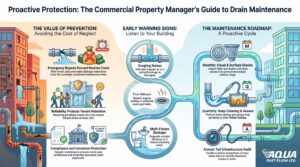
- Emergency repairs cost more. After-hours plumbing calls, water damage restoration, and business interruption costs almost always exceed the price of routine maintenance.
- Tenant retention depends on reliability. Recurring plumbing issues are one of the top complaints that drive tenants to leave when their lease is up.
- Insurance and liability exposure. Water damage claims tied to neglected maintenance can complicate coverage and raise premiums.
- Code compliance. Many municipalities require documented maintenance for grease traps and backflow prevention systems, especially in buildings with food service tenants.
Common Drain Problems in Commercial Buildings
Before building a maintenance plan, it helps to understand what you’re defending against.
Grease and Food Waste Buildup
Restaurants, cafes, and shared break rooms are the number one source of grease-related clogs. Even with grease traps in place, buildup accumulates over time and needs regular removal.
Mineral and Scale Deposits
Hard water leaves mineral deposits that narrow pipe diameter over years, slowing drainage long before a full blockage occurs.
Tree Root Intrusion
For properties with older sewer lines, tree roots seeking moisture can infiltrate pipe joints and cause slow, then catastrophic, blockages.
Foreign Objects and Improper Disposal
Paper towels, wipes (even “flushable” ones), and debris from renovations or cleaning crews are common culprits in multi-tenant buildings where you don’t control every user’s habits.
Aging Infrastructure
Older commercial buildings often have cast iron or clay pipe systems that corrode, crack, or shift over time, reducing flow capacity and creating leak points.
Building a Preventive Drain Maintenance Schedule
A maintenance schedule should be based on usage intensity, not a one-size-fits-all calendar. Here’s a practical framework to adapt to your property.
Monthly Tasks
- Visual inspection of visible drains, floor sinks, and grease traps in high-use areas (kitchens, laundry facilities)
- Check for slow drainage or gurgling sounds reported by tenants
- Clean strainers and screens on floor drains
Quarterly Tasks
- Grease trap pumping for food service tenants (or more often depending on volume; check local code requirements)
- Hydro jetting of high-risk lines to clear buildup before it becomes a blockage
- Inspection of backflow prevention devices
Annual Tasks
- Full camera inspection of main sewer lines to catch root intrusion, cracks, or bellies in the pipe
- Review and update your maintenance log and vendor contracts
- Assess older sections of plumbing infrastructure for replacement planning
As-Needed Tasks
- Immediate response to any reported slow drains, odours, or backups
- Post-renovation inspection to clear construction debris from lines
Warning Signs Property Managers Should Never Ignore
Training on-site staff to recognize and report signs early is one of the most cost-effective tools in your maintenance program. Encourage your maintenance staff and tenants to flag these early indicators before they escalate into emergencies:
- Slow-draining sinks, tubs, or floor drains
- Gurgling noises from pipes or fixtures
- Foul odours near drains, especially in kitchens or restrooms
- Water backing up in a different fixture when another is used (a sign of a shared line blockage)
- Visible moisture, staining, or mold near floor drains or under sinks
- Frequent minor clogs in the same location, suggesting a deeper structural issue
Working With the Right Plumbing Partner
Preventive maintenance works best with a consistent plumbing vendor who knows your property’s history. A strong vendor relationship also means faster response times and more accurate diagnosis when something does go wrong. When evaluating or negotiating a service contract, look for:
- Commercial-specific experience, particularly with your building type (retail, office, food service, mixed-use)
- Camera inspection and hydro jetting capabilities, not just basic snaking
- Documented service reports for your maintenance records and lease compliance
- Emergency response guarantees, including after-hours availability
- Transparent pricing for both scheduled maintenance and emergency calls
Documenting Your Maintenance Program
Keep a maintenance log for every property that tracks:
- Date and type of service performed
- Vendor and technician name
- Findings (camera inspection footage, photos of blockages, pipe condition notes)
- Follow-up recommendations
This documentation matters for three reasons: it protects you in tenant disputes, supports insurance claims, and gives you the data to plan capital improvements before a failure forces your hand.
Why Preventative Drain Maintenance Is Essential
Preventive drain maintenance isn’t a glamorous line item, but it’s one of the highest-leverage investments a commercial property manager can make. A modest, consistent maintenance schedule reduces emergency calls, protects tenant relationships, and extends the life of your building’s plumbing infrastructure; all for a fraction of the cost of a single major backup.
Building the habit now, before you have a flooded basement or a shut-down commercial kitchen, is what separates reactive property management from proactive asset protection. For proven and efficient drain maintenance solutions, our team at Aqua Fast Flush is equipped to keep your commercial business flowing. Contact us today to get started.
If you need a copy of this guide, you can simply click here.